SkyCity's FY26 Earnings Highlight Pressures from Mandated Play Tracking and Operational Shifts
Katja Hoffmann · Aug 23, 2026

SkyCity's FY26 Earnings Highlight Pressures from Mandated Play Tracking and Operational Shifts
SkyCity Entertainment Group posted its FY26 results in August 2026, and the numbers tell a clear story of revenue growth offset by multiple cost pressures. Net profit after tax fell 37.6 percent year on year to NZ$18.2 million while EBITDA dropped 44.2 percent to NZ$120.5 million. Revenue still rose 6.5 percent to NZ$878.9 million for the year ended 30 June 2026, yet the gap between top-line gains and bottom-line outcomes widened because of several distinct factors.
Breaking Down the Financial Picture
Observers note that the revenue increase came largely from existing operations and new capacity at the New Zealand International Convention Centre, yet higher operating costs tied to that facility ate into margins. The rollout of mandatory carded play across SkyCity venues created an additional EBITDA drag estimated at NZ$20-30 million. Weaker visitation patterns and reduced premium play activity added further strain, while the ongoing Middle East conflict affected international high-roller traffic.
Those who've followed the company's reports see the carded-play mandate as a structural change that alters how customers engage with gaming floors. Data from the period shows the policy contributed directly to the profit decline even as overall revenue climbed. The new convention centre, while positioned for long-term growth, brought immediate cost increases that the company had to absorb during the same twelve-month window.
External Factors and Market Conditions
Global events also played a role. The Middle East conflict reduced discretionary travel from key source markets, and premium players who typically drive higher margins visited less frequently. SkyCity management pointed to these conditions in its release, noting that both visitation volumes and average spend per visit declined in affected segments. Cost-cutting measures were already underway by the end of the financial year, and preparations for regulated online gambling in New Zealand advanced as a separate growth avenue.
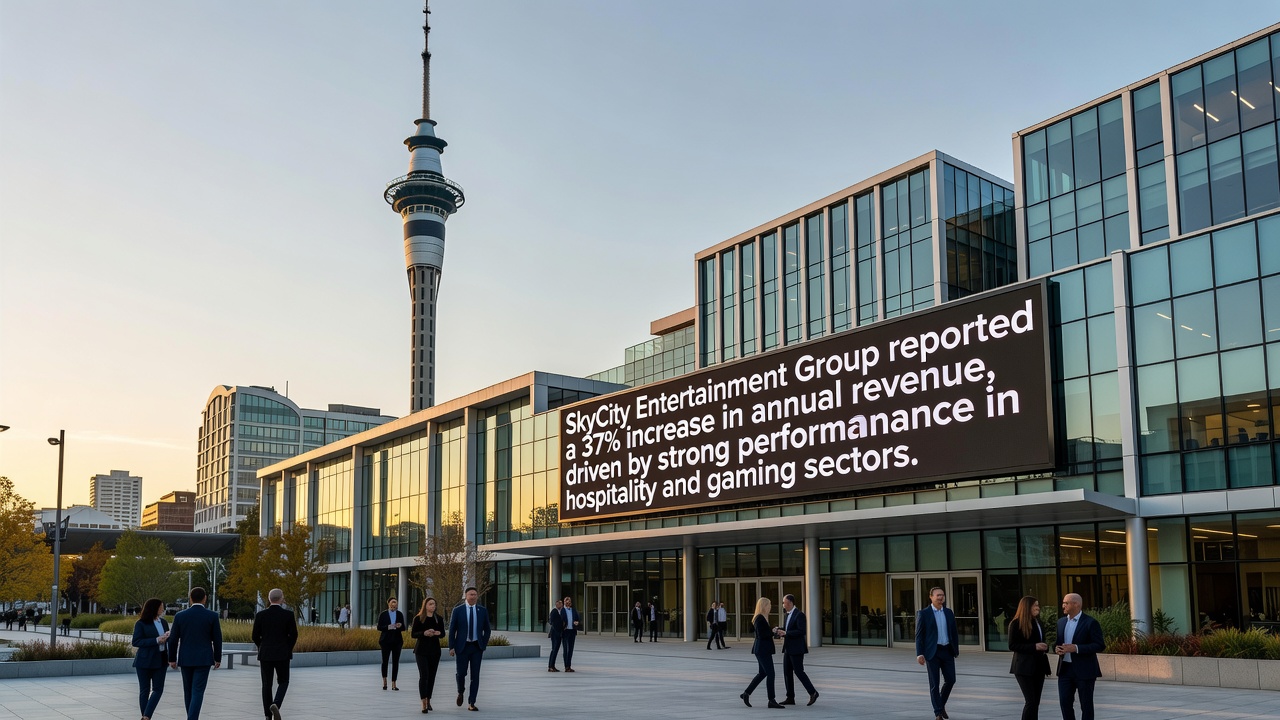
Analysts tracking the sector point out that the combination of regulatory-driven changes and external shocks created a challenging operating environment. The company’s focus on operational efficiency and digital expansion reflects an attempt to offset the near-term headwinds documented in the FY26 figures. Figures released alongside the results show that the revenue lift from the NZICC was real, yet it did not fully compensate for the listed cost increases and revenue mix shifts.
Strategic Responses Underway
SkyCity has outlined several initiatives to address the profit shortfall. Cost-reduction programs target both fixed and variable expenses, while work continues on compliance with upcoming online gambling regulations. Those initiatives are expected to unfold across the next reporting periods, and the company has indicated it will provide updates as milestones are reached. The investor presentation accompanying the results contains detailed segment breakdowns that illustrate how each business unit performed under the new conditions.
One study of similar regulatory transitions in other markets suggests that mandatory carded play can initially suppress activity before stabilising at a new baseline. SkyCity’s experience aligns with that pattern so far, although the company emphasised that full-year comparisons remain influenced by the timing of the rollout. Observers note that the Middle East conflict’s effect on travel is likely to persist until regional conditions improve, adding another layer of uncertainty to forward projections.
Looking at Segment Contributions
The New Zealand operations bore the brunt of the carded-play impact and higher NZICC costs, whereas Australian properties faced softer premium play. Revenue growth occurred across most venues, but the mix of lower-margin activity reduced overall profitability. The company’s balance sheet remained intact, and management reiterated its commitment to disciplined capital allocation while these adjustments take effect.
External reporting from August 2026 shows that SkyCity’s share price reacted to the results in line with market expectations given the pre-announced headwinds. Investors received clear guidance on the one-time and recurring nature of the cost items, which helps separate structural changes from temporary disruptions. The regulated online gambling opportunity remains a longer-term lever that could diversify revenue once licensing frameworks are finalised.
Conclusion
SkyCity’s FY26 results encapsulate a period of transition marked by regulatory compliance costs, facility expansion expenses, and international travel constraints. The reported figures—NZ$18.2 million net profit after tax and NZ$120.5 million EBITDA—sit against a revenue base of NZ$878.9 million, illustrating how top-line growth can coexist with margin compression. Strategic steps now focus on cost discipline and digital readiness, with the FY26 Financial Results providing the baseline against which future progress will be measured.